Here's some great advice on how to read through a book and get a good feel for it.
1.25.2012


Moonwalking With Einstein-Book Review

It's interesting to read about the strange and unusual feats people can accomplish. But Foer makes it a point to show just how difficult it is to do a lot of what these uber-geeks do. And it is difficult, but not impossible. Having seen the competition, he decides to spend a year training for the event. Along the way he shows some of the debates, crazy antics, and cool tricks a lot of the memory champs are able to accomplish. He befrends, and is trained by British Memory Champ Ed Cooke. Cooke seems to come off as a bit smug in the book, but that seems to run in the blood of a lot of the people Foer meets. He gets to meet famous memory man Tony Buzan. I have to admit, having read Buzan's books in the past, I was expecting him to come off geeky and neebish. Turns out, the man is a flashy diva and he has the clothes to prove it. Along the way Foer takes his readers through the history of mnemonics (the art and techniques used in memorizing). Some of them include the Memory Palace, Linking, and The Peg.
I was glad to see the role medieval theologians played in keeping the art of memory alive. The truth is, they had to. For instance, Foer mentions that a lot of theologians like St. Augustine might have access to a book for a short while. After that, they might never see it again. So they had to be able to memorize the contents of the book. If they ever quoted it in any of their writings, it was done from memory. And that is what really impressed me about this book. I was able to see one of God's gifts and see how useful it is. Imagine not being able to read any scripture for a while? How much of it would you have had memorized? Before the mass printing of the Bible, pastors and theologians and laypeople had to have large parts of scripture memorized. We really are spoiled in the west. We have easy access to a Bible and most any other reference work (even wikipedia!). But the book points out that for the longest time, people's libraries were made up of maybe a bible, a devotional book, and few other things. After reading the book, I felt very challenged to memorize more scripture. I think I'll start using my memory to memorize the Book of Mark.
In search of how memory works, Foer interviewed people with unusual memories. People like Kim Peek. He inspired Dustin Hoffman's character in Rain Man. Turns out even his sharp mind isn't fallible. But he was able to remember vast amounts of information and recall them immediately. Another person he interviewed was a man known only as EP. He was studied by psychologists because he had lost a large portion of his memory due to a syphiliss infection that ate away parts of his brain. The result was that he only remembered his life this his late 50's. He was in his 80's when Foer interviewed him. EP would forget things after a few minutes, so he was confined to his home. Foer describes his daily routine of going for a walk and talking to neighbors. Talking to them was like meeting them for the first time. A weird and sad bliss to live in. Reading about this man was moving. I hope I never forget my loved ones like that. But while I do have access to a good memory, I hope to make the best use of it.
'Moonwalking' isn't a how-to book. But it does have a lot of helpful advice on how to prepare for the memory championship, as well as a lot of insight into how memory techniques helped society before the printing press. If you'd like to read some good books on memory improvement, take a look here.
The Real Elephant In The Room

Chris Rosebrough of Fighting for the Faith and Pirate Christian Radio has had rather busy morning. He went to the latest meeting of the pastoral minds held at the event The Elephant Room 2. Here is what Chris said happened this morning.
Today, I traveled to Rowling Meadows, Illinois to attend James MacDonald's Elephant Room 2 conversations. Upon entering the event venue I was met by a security guard and Jim Rowan, an elder at Harvest Bible Chapel and was promptly told that my entrance to the Elephant Room had been revoked and that I had to immediately leave the premises or I would be arrested for trespassing.You can read the rest of what he said here.
It's sad that even within the reformed tribe which I claim as my own, we can see such unchristlike behavior. The situation is bad enough, but it comes at the tail end of a very interesting few weeks revolving around key players who will be at today's Elephant Room.
- This week James Macdonald, who's church is hosting the event, resigned from the Gospel Coalition. His resignation letter can be read here. This was, I think, partly due to criticism for his involvement with The Elephant Room and the people he's had visiting.
- T.D. Jakes is being interviewed today. As many of you know, people have had serious problems with Jake's Word-Faith theology as well as his modalist views of the Trinity.
- Mark Driscoll is also at The Elephant Room. This week, his church, Mars Hill, was brought under scrutiny after a former member released information that brings to light what appears to be a hard handed approach to church discipline.
When you have all these things happening at once, they're going to get attention. So that brings me back to the title of this post. What is the REAL elephant in the room? Our lack of accountability. We've given our rock star pastors an easy pass. As long as they say the right things, quote from the right guys and affirm TULIP, it's all cool. Now, I'm not saying that all allegations against them are right, or that we should wikileak them (as Sovereign Grace unfortunately experienced last year). But, I think we need to stop putting people on a pedestal. We've let that happen too easily in the reformed camp, and unless we get our house in order, the world will happily oblige to do it. And they won't be as gracious.
1.23.2012
From The Web: 25 Things I Learned Opening Up A Bookstore
Over at the Open.Salon blog, JL Sathrie gives a list of 25 things she's learned since opening her used bookstore. I support local bookstores and thrift stores (and you should too!) and I found some of these pretty funny and helpful. Take a look.

1.19.2012
Will Amazon Destroy The Publishing Industry?

Tech blog PandoDaily is reporting what many of us have seen for a while: Amazon is slowly killing the publishing industry. Have you seen how cheap they price e-books? The biggest threat isn't their cheap prices, but the fact that they now have a publishing arm, and may soon take blockbuster authors away from the traditional publishing houses. From an anonymous source in the article
We can’t pay $1 million (advances) for books anymore. Amazon could probably afford to lose $20 million/year in their publishing arm just to put the other publishers out of business. I think that’s what they’re trying to do–throw money around in an industry that doesn’t have any, until Amazon becomes not only the only place where you buy books, but the only place that publishes books, too.
Scary, but I do see one upside of this for Christian publishing: authors who deserve a voice being able to get a chance without having to jump so many hurdles. As someone who is hoping to publish an e-book soon, I can't wait to see what happens.
12.10.2011
Thanks Kregel Publications, Plus News and Prayer Request
I have been (unfortunately) been able to keep up with my all book reviews, but I will try and have some up by the end of the year. Kregel Publications has sent me the first in a series of books on the text of the New Testament. They kindly sent me a copy of Revisiting The Corruption of the New Testament edited by Daniel Wallace. I hope to have a review of the book up just before Christmas. I'll also be reviewing graphic novels as I've been reading more of them lately.
Before I go I'd just like to ask prayer for a personal matter. For the better part of the year I've no been working. I have done work as a notary, but I need steady work. I'll be embarking on new ways to look for work soon. Please pray I find something soon. It would be a big blessing.
Finally, I plan on doing more blogging in the future, but I'll also be doing more fiction writing and blogging over at my tumblr page Frank Writes! Thanks again, and I'll see you soon.
10.04.2011
A Secular Noah? Aronofsky To Make "Noah" Epic
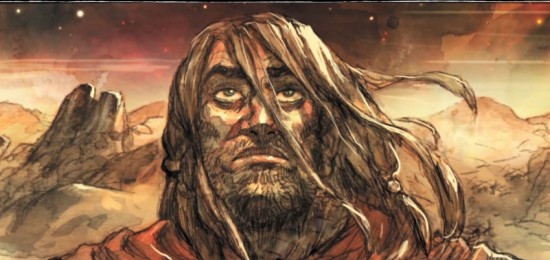
Today it was reported that Darren Aronofsky finally got 150 million dollars to make an epic movie about the biblical story of the flood and the life of Noah. The artwork he released some time ago for a graphic novel is very striking. Here's a trailer he made for the comic.
His own take on the story may not be filled with the themes found in the Bible. In one interview he states:
“It’s the end of the world and it’s the second most famous ship after the Titanic. So I’m not sure why any studio won’t want to make it,” said Aronofsky. “I think it’s really timely because it’s about environmental apocalypse which is the biggest theme, for me, right now for what’s going on on this planet. So I think it’s got these big, big themes that connect with us. Noah was the first environmentalist. He’s a really interesting character. Hopefully they’ll let me make it"And it shouldn't entirely surprise us, Aronofsky is an atheist. He's also very involved in environmental charity work. Of course, that doesn't stop him from touching on spiritual issues in movies like "The Fountain". However, it is a secular spirituality that according to him is based on
"We’re all just borrowing this matter and energy for a little bit, while we’re here, until it goes back into everything else, and that connects us all. The cynics out there laugh at this crap, but it’s true....To me, that’s where the spirituality is. Whatever you want to call that connection -- some people would use that term God. That, to me, is what I think is holy."Should we worry? Well he says that it "[i]sn't a very religious story". Of course a quick look at the Biblical text shows that this isn't so. He can anachronistically read environmental ruin into the story, but that ruin came about because of God. Its human sin that brings about God's wrath. But his grace towards Noah is what ultimately saves mankind. Sin, mercy, and redemption, are all biblical themes that can make for great story telling. But a post-modern twist to the story leaves us only with a Noah who has only himself to survive. It tells us that mankind hasn't really learned anything (if we're still facing the same problems Noah did) and doesn't give us much reason to hope. But if we live in an endless cycle of matter and energy that eventually goes back to everything else, why should anyone care? But if one day we have a God who once destroyed humanity, and promises to do it again, then caring for his creation makes much more sense.
Subscribe to:
Posts (Atom)