2.25.2011

Missional Street Preaching????


Yesterday, over at the Reformissionary Blog, Steve McCoy wrote what Joe Thorn is calling "the most important post of the year". I came across it early on and thought it would be another cool blog post from a great missional reformed blog. I was certainly surprised when I read it. Was it about some new ministry method? A new Reformed book? Another (sigh) Reformed controversy? No. He's calling those of us in the Young Reformed Camp to return to our great heritage of street preaching.

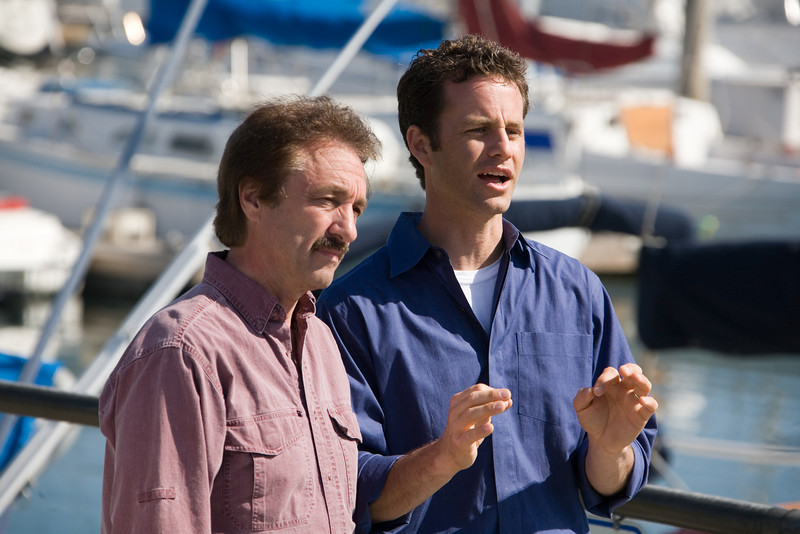
Street Preaching. That is the new cutting edge idea he is advocating. I'm sure we've all seen street preachers screaming at local shopping centers or colleges that the people are sinners who are going to hell.

This is him on a good day

Heck, I've cringed at the sight of well meaning people screaming like maniacs on street corners. But Steve asks a very good question:
What if evangelicals hit America with 200, or 500, or 1,000 theologically strong, gospel-centered pastors who start preaching in open-air and public places in their cities, beyond their Sunday morning worship services, at least once a week for the rest of 2011? What would happen? 
These guys know something about street preaching

 Let that question hit you for a moment. Our movement is made up of some godly, theologically informed people. Image if more of us went out there to preach the good news? McCoy outlines ten things that might happen. Among them are a raised awareness of the gospel, and outreach to people who wouldn't normally enter your church walls.  It might shock a lot of us in the camp to know that the people we look up to (Spurgeon, Whitfield, Edwards, Van Til!) were also street preachers. Since yesterday, Steve has updated his blog with some information a few of us shared with him, and I encourage you to take a look and join the conversation. I'll try and post some of that as I can. Please visit the conversation going on at the Reformissionary blog.   Please pray and see if this is a ministry area that God is leading you into.

I should add, this may not be a ministry for everyone. But I do think there are a lot of us that might be able to use this ministry tool. I"ll try and post my findings in the days to come. 

2.21.2011

$1 ESV Bible

                    
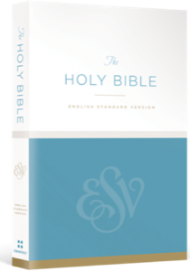
Justin Taylor, over at The Gospel Colition, is reporting the good news that Crossway is now selling a paperback ESV Bible for $1 (when bought in bulk). If your ministry needs to give away free Bibles, you may as well pay a good deal for a good bible. I personally use the ESV Study Bible, read it on-line, and would recommend it to anyone who wants a good Bible to read and study from. Check out the video below, and see why John Piper likes the ESV.


2.04.2011

Flashback Friday's: Pixar Edition

Hi Everybody! Well, I figured if I'm going to get back on this page, I should bring back some of the fun elements. Well, as you know, Flashback Friday's are my weekly nostalgic look back at pop culture. This week, Pixar celebrates it's 25th anniversary as an independent company. From the Wikipedia article, it states that "Pixar was founded as the Graphics Group, one third of the Computer Division of Lucasfilm that was launched in 1979 with the hiring of Dr. Ed Catmull from the New York Institute of Technology (NYIT)". And after all these years, the technology has flourished to give us some incredible movies. Pixar needs to be credited with created animated films that aren't afraid of speaking to adults as well as kids. If you've seen Toy Story 3 you know what I'm talking about. Here's a sample of the work Pixar has given us over the years.

Young Sherlock Holmes
One of the first times Pixar's technology was used in a film was from this scene from the movie Young Sherlock Holmes. I really enjoed the special effects of this movie, but for years I wondered how they did this scene. Turns out it was with a little Pixar magic.


The Incredibles
My appreciation for Pixar however started with a little movie called The Incredibles. Not that I wasn't a fan, but as I was in college at the time, this was the firs time I could appreciate one of their movies. It was a superhero movie but it felt like it belonged in the same class of movies as James Bond or Indiana Jones.Very good company to be with. The jazz score gave it a classy feel. This wasn't just a kids movie, this was for anyone whoever wanted to be a hero. Sadly, I doubt that they'll ever make a sequel, but if they do, I'll be the first in line to see it.


Ratatouille
By the summer of 07', a lot of buzz surrounded Pixar's next film: Ratatouille. It was a gamble, I thought, to make a movie about a rat that wanted to be a chef. Kids movies could get away with this stuff, but it wouldn't appeal to adults. Yet, in the summer of '07 that is exactly what happened. Foodies of all ages rejoiced as they saw tasty recipes made by a little rat with big dreams. Pixar took the culinary world and made it relatable and in the process made a very grown up cartoon. I could be wrong, but I think this was the first step's Pixar was taking to making movies that could actually touch on adult themes while still appealing to kids.


UP
When the teaser trailer to this film appeared, I was immediately impressed. I don't remember the last time and octogenarian was the hero of an animated film. Pixar again took a gamble, and created a truly wonderful movie that will be remembered as one of the best films of the 2000's. The first ten minutes of UP proved to be the most hauntingly beautiful as they celebrated love, life, marriage, and the pain of death. The adventure that makes up the rest of the movie made me feel like a kid again.


I hope Pixar continues to create movies that touch both mind and heart. I know I'll pay for that any day. Now say it with me, Adventure is out there.


1.21.2011

Free Faith and Science Lectures and Research Papers


I came across the Faraday Institute. On its website is a large collection of papers and lectures from well known Christian scientists on the relationship between faith and science. It will definitely give you a lot to read and think about. From its website, here are the aims of the institute:

The Faraday Institute for Science and Religion is an academic research enterprise based at St Edmund's College, Cambridge. The Institute has four main activities:
  1. Scholarly research and publication on science and religion, including the organisation of invited groups of experts to write joint publications.
  2. To provide short-term courses in science and religion.
  3. To organise seminars and lectures on science and religion.
  4. To provide accurate information on science and religion for the international media and wider public.
The Faraday Institute has a Christian ethos, but encourages engagement with a wide diversity of opinions concerning interactions between science and religion, without engaging in advocacy. It aims to provide accurate information in order to facilitate informed debate.

A Short Guide to Exegesis

I know a lot of you are in ministry, or in school, or are just interested in better Bible study. Recently, I came across a short guide to exegesis that I think would be a great help. For those who don't know what exegesis is, it is described as "A systematic process by which a person arrives at a reasonable and coherent sense of the meaning and message of a biblical passage" I like this guide because it is short, to the point and would be a big help to anyone who wants to do better bible study. It doesn't cover everything a full guide to exegesis would cover, but it should be enough to get you started. If I run across anything else like this, I'll be sure to share.


---------------------------------------------------------------------------------------

Exegesis


A systematic process by which a person arrives at a reasonable and coherent sense of the meaning and message of a biblical passage
Goal
  • to explain what the text meant to its original audience and in its original historical setting
  • to explain what the text means for today

Three Steps of Exegesis


Observation: "What does the author say?"Begin by reading the passage, perhaps a few times
  • use a good translation; it may help to read a few translations
  • be sure to take account of the translation methodology
  • read the larger context; the chapter or letter or book
Determine the limits of the passage
  • where does the writer begin/end the thought / story?
Note your specific observations concerning the passage
  • what key words, images, symbols are used?
  • where else are key words used by the same writer? By other biblical writers? Outside the Bible?
  • what characters appear and what are their relationships?
  • what issues are addressed in the passage?
  • are there any variant readings noted in the footnotes? (=textual criticism)
  • is there a particular literary form (genre) to take note of (e.g., letter; healing; parable)? (=form criticism)
  • are there any structuring devices used in the text (e.g., parallelism; proofs)? (=rhetorical criticism)
  • did the passage have a source? do we have access to that source? (=source criticism)
  • what unique views or emphases does the writer place on the text? (=redaction criticism)
    • how has the writer used the sources?
    • what is the writer's life situation or theological outlook?
  • are there any parallel texts inside or outside of the Bible
  • what are the socio-cultural codes embedded in the text (e.g., honour/shame)? (=social-scientific criticism)
  • is there any independent confirmation of the events recorded? (=historical veracity)
Ask yourself what cultural assumptions you might be making; e.g., economic, health, family
Use exegetical tools (commentaries, dictionaries, atlas, etc.) only when necessary


Interpretation: "What did the author mean?"
Socio-historical context: What is the author's and audience's situation?
  • politics; geography; topography; demographics; customs
  • use a good Bible dictionary, atlas, encyclopedia
  • for whom was it written?
  • what issue(s) does the passage address?
Literary context
  • interpretation goes along with genre
    • is the passage narrative, poetic, parable, etc.?
    • should it be interpreted literally or figuratively?
  • focus on significant words, phrases, statements
    • what is its meaning (definitions; contextualize)?
    • what is its significance in the passage?
      • why would the author choose this way of expression?
      • does it have a special grammatical role?
      • does it make a difference if it were left out?
    • what is implied by the use of this term or phrase or grammatical structure?
Rhetorical context: what is the significance of the progression in the thought pattern?
  • what was the author trying to convey to the audience - e.g., theological truths, practical advice?
  • what types of responses did the author expect on the basis of writing this passage?
Theological context: what do you know about the author's theological perspective?
Investigate the secondary literature; compare and adjust your own observations
Concisely summarize the primary ideas of the passage; what is the author trying to convey?


Application: "What does it mean for me?"
This step involves the move from text to sermon or Bible study
This is the point at which hermeneutics comes to the fore
  • moving from one social context to another
  • that is, moving from the ancient world to our own world(s)
What was the author's purpose in writing this passage?
Did the author accomplish this purpose?
Does the passage contain "universal truths" (applicable in all ages) or "contextual truths" (applicable for a certain period of history)? Know how and why you make the distinction between these two "truths"
How does the passage fit with the whole message of the Bible?
Ask yourself the following questions:
  • what am I to believe?
  • what am I to do (actions, attitudes, sin)?
  • what do I learn about relationships?
  • what is the good news for me?
Now ask "how would that be initiated in my life?"
    Beware of reading twentieth century cultural norms into a passage. However, do use your imagination to apply the passage to contemporary society. This helps identify what some of the issues in the text might be.
Ask how you can address your particular audience
  • how can you best explain the original meaning of the text?
  • how can you help them connect with the truths of the text?
Be sure to understand your audience as best you can.
Use a format appropriate for your audience (e.g., sermon/homily; Bible study; case study; drama).

Writing An Academic Exegetical Paper


Note that this is not to be a sermon/homily. The emphasis should be on understanding the passage not on preaching the passage.
The aim of the paper is the first goal of exegesis: to explain what the text meant to its original audience and in its original historical setting.
The paper should concentrate on findings from the observation and interpretation steps and should only include an application if the instructor has requested it.
In writing the paper ask yourself the following questions:
  • Do I understand the text or texts I intend to discuss?
  • Are my notes clear and complete, allowing me to describe and respond to key features in the text(s)?
  • Does my opening paragraph lead to a specific and precisely formulated thesis that anticipates the main points of the argument of the essay?
  • Do my topic sentences reflect a logical development of that thesis?
  • Are there smooth transitions between paragraphs and sentences?
  • Do paragraphs cohere, usually around a single idea?
  • Is the meaning of each sentence clear, and are the structures of sentences varied?
  • Are general or abstract observations supported with concrete examples?
  • Have I carefully proof-read and revised for grammatical, spelling, and typographical errors?
  • Have footnotes and quotations been double-checked for accuracy and proper placement?
  • Has proper footnote and bibliographical form been followed?
The structure of the paper depends on the passage. Some texts unfold an argument in a step-by-step manner. They can be discussed in a verse-by-verse format. Others, especially narrations, work best if handled in a theme-oriented structure. Sometimes, a definition has the amount of pliability to fit your arguments. Always allow some time between your research and your writing for this analysis stage to jell (summarized from Hayes and Holiday 1982:110 and 112).

Guides for Biblical Exegesis


Danker, Frederick W. Multipurpose Tools for Bible Study. 4th edition. Minneapolis: Fortress, 1993.Fee, Gordon D. New Testament Exegesis: A Handbook for Students and Pastors. Philadelphia: Westminister, 1983.
Harrington, Daniel J. Interpreting the New Testament: A Practical Guide. Wilmington: Michael Glazier, 1979.
------. Interpreting the Old Testament. Wilmington: Michael Glazier.
Hayes, John H. and Carl R. Holladay. Biblical Exegesis: A Beginner's Handbook. Atlanta: John Knox, 1982.
Soulen, Richard N. Handbook of Biblical Criticism. 2nd edition. Atlanta: John Knox, 1981.
Stewart, Douglas. Old Testament Exegesis: A Primer for Students and Pastors. Second edition. Philadelphia: Westminster, 1984.
Wald, Oletta. The Joy of Discovery in Bible Study. Minneapolis: Fortress, 1975.

Podcasts worth your time


If any of you have an iPod (and who doesn't?) I wanted to share with you some of the podcast's that I've been listening to and that I think would be worth your time.

The Dividing Line

James White of Alpha and Omega ministries not only debates, teaches and writes, but he also hosts a podcast twice a week where he deals with apologetics issues, as well as cultural issues. He's a walking encyclopedia on Mormonism, Islam and bad theology in general.

Theology Unplugged

For many of you who use The Theology Program, Michael Patton is no stranger to you. He's the creator of Credo House, Parchment and Pen Blog, and The Theology Program. Well, few people know the man also podcasts along side people like Sam Storms. Tackling a host of theological issues, this is a podcast that is worth your time.

Fighting for the Faith

Mention the phrase "Pirate Christian" and if you've been on-line for a while you'll think of Chris Roseburough. The man is the founder of Pirate Christian Radio. Mainly Lutheran programming (not that there's anything wrong with that) his show is the main course. He offers what he calls "a daily dose of biblical discernment". I have to admit that his podcast is the longest on here (it runs for almost two hours DAILY) but the man gives you a little bit of everything. From apologetics and news, to sermon reviews, it's more Lutheran fun than an episode of Davey and Golitah!

1.20.2011

Trust Issues


Luke 16:10 - "Whoever can be trusted with very little can also be trusted with much, and whoever is dishonest with very little will also be dishonest with much."

Something I've learned is how easy you can lose trust. You can spend a lot of time building it, taking it for granted, and then one day you mess up. Bad communication, an inconsiderate comment, or plain stupidity will lose it in a second. While this verse deals with trust in the context of discipleship(and the many things God will hold you accountable for), I believe the principle behind it applies to other areas. If you can be trusted with something as simple as being there when people need you or someone else's stuff, they might just trust you with a whole lot more. Mess that up, and you'll have to earn that trust all over again. At this moment, I think I should apologize if I have lost trust with people because I've been late or unintentionally hurtful. I hope I can earn your trust. I'm willing to make the effort.